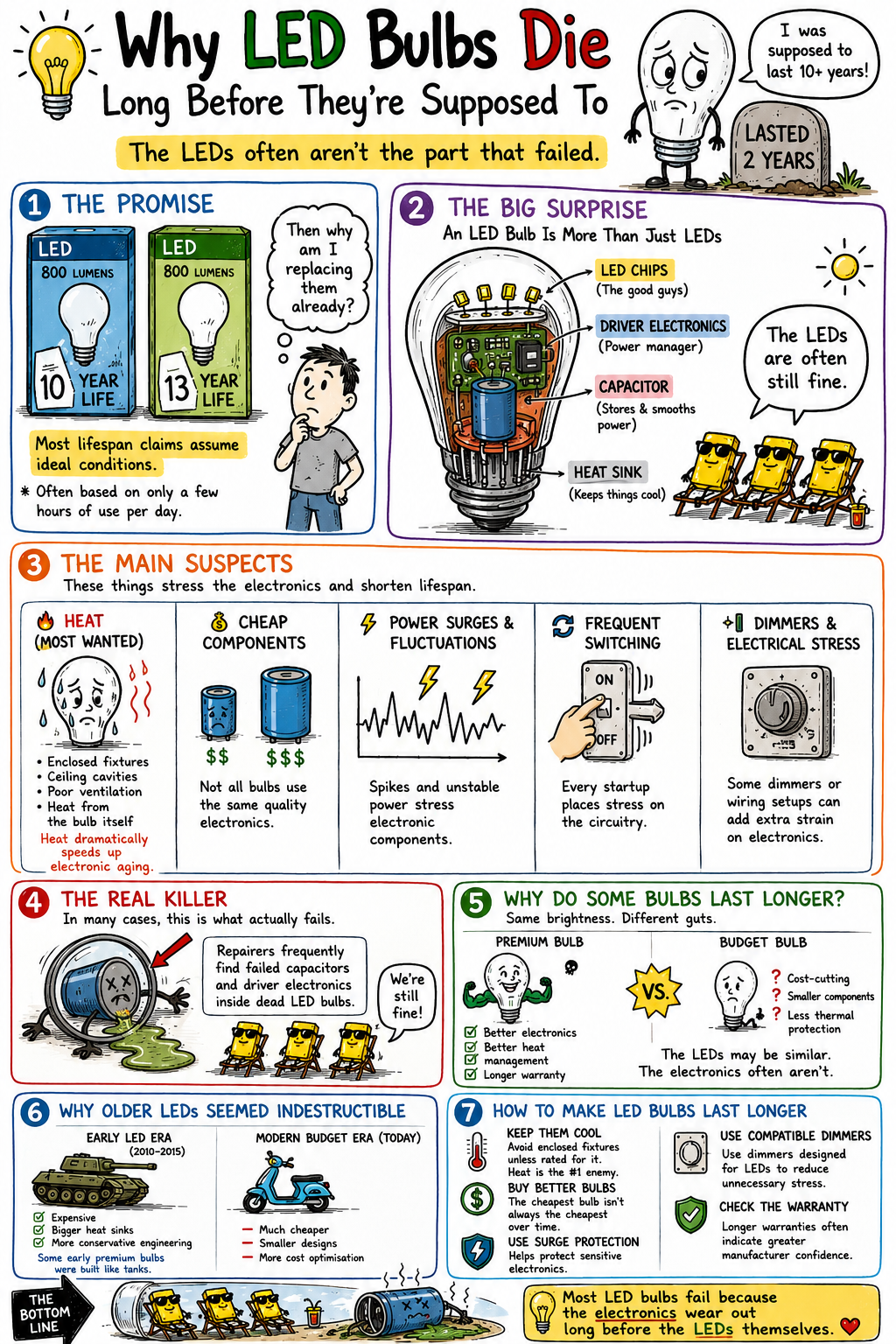
Why Do LED Bulbs Die Long Before They're Supposed To?
 SPRINGLIGHTING
SPRING LIGHTING NEWS
Product development, manufacturing progress and export service updates from Spring Lighting.
Temperature is a key factor affecting LED reliability and service life—but measuring only the outside housing may not show the real thermal condition of the LEDs.
For a more accurate evaluation, we use a multi-channel temperature recorder and place the thermocouple near the LED cathode lead or solder point inside the lamp.
Under a controlled ambient temperature of 25°C, readings are recorded at:
Our internal control target is to keep the measured cathode lead or solder-point temperature below 100-105°C under these conditions.
The test method and limit should also be checked against the LED package datasheet and the specific lamp design.
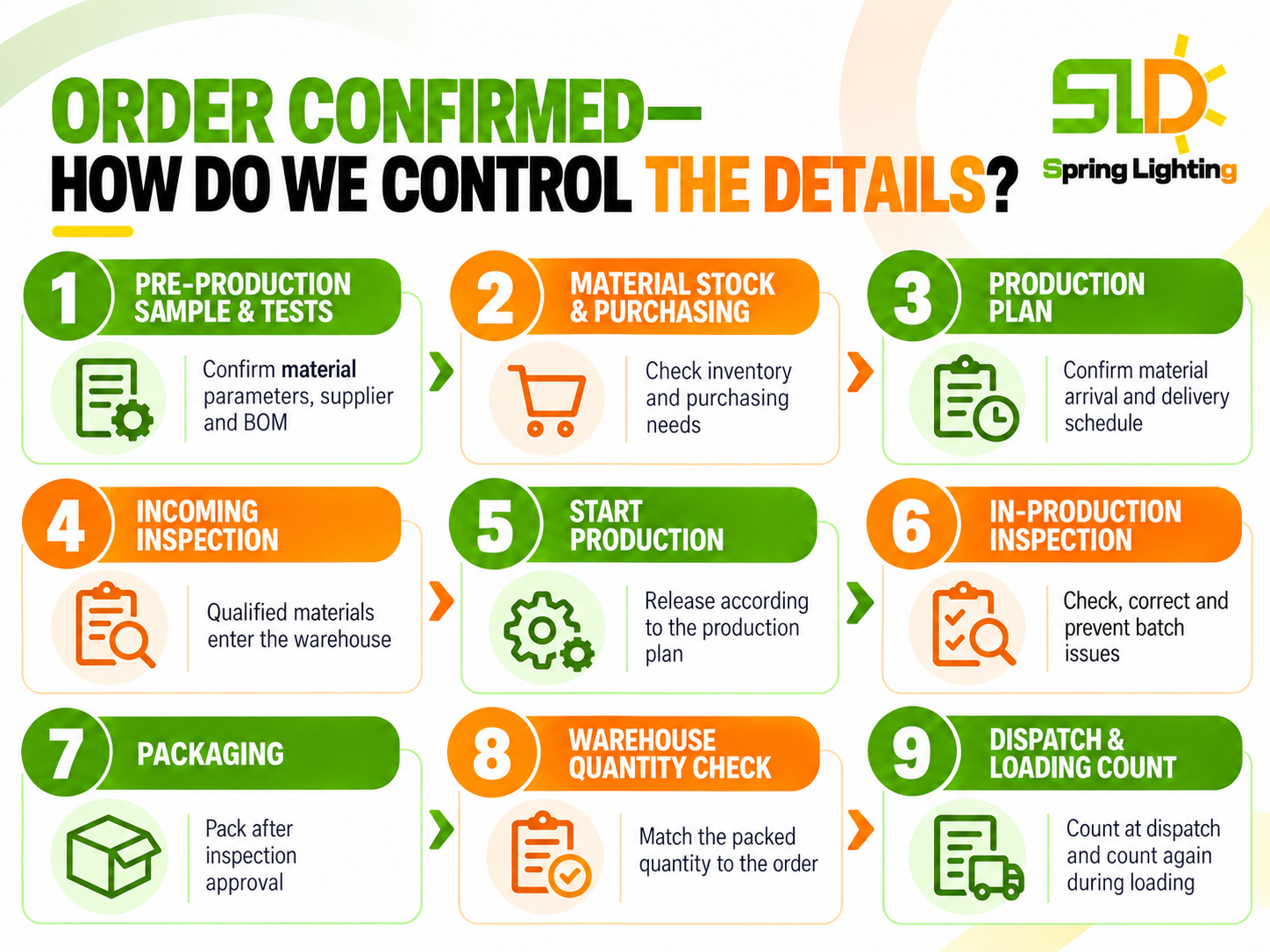
Once an LED lighting order is confirmed, we follow and verify each stage of the production-coordination process to keep the product specifications, quality and shipment quantity aligned with the order requirements.
After the order is entered into the production system, the technical team prepares a pre-production sample and carries out the required tests. The raw-material parameters and designated suppliers are confirmed before the BOM is issued for production.
The purchasing team checks the existing raw-material inventory against the BOM and identifies which materials need to be purchased.
The production team prepares a preliminary production schedule based on the required delivery date. It also coordinates with the purchasing team to confirm when all required materials will be ready.
All incoming materials are inspected before being accepted. Only materials that meet the confirmed requirements are approved and transferred into the warehouse.
Once the required materials are ready, the production team releases the order to the production line according to the confirmed schedule.
During production, the bulk products are inspected according to the required checkpoints. If any problem is found, the cause is reviewed and the production process is adjusted promptly to prevent the issue from affecting the whole batch.
Products that have passed the required inspections proceed to packaging according to the confirmed packaging requirements.
After packaging, the finished goods are transferred into the warehouse. The warehouse quantity must be checked against the order quantity to prevent shortages.
The shipment quantity is counted once when the goods leave the warehouse and checked again during vehicle or container loading. This helps prevent under-loading, incorrect loading or over-loading.
A specification sheet defines what should be delivered. A controlled workflow helps ensure that the confirmed requirements are followed throughout the order.
Which control step is most important in your LED lighting orders?

Quality is not just a statement in a catalogue or on a specification sheet.
It comes from the processes followed before and during production, the inspections performed at key stages, the consistency maintained between orders, and the acceptance standards that are not compromised.
For LED bulbs, panel lights, and downlights, buyers should look beyond listed parameters. Ask how materials are checked, how production is coordinated, which inspections are arranged, and how deviations are handled.
Specifications describe the target. A controlled process helps deliver it consistently.
What quality checkpoints do you require before shipment?
Before requesting a quote, confirm these key details:
Spring Lighting supports LED lighting sourcing, production coordination, quality inspection, customized packaging, and export services for international B2B buyers.
LATEST FROM OUR TEAM
Updates to our LED bulb, panel light, downlight and spotlight fixture ranges, including new specifications, finishes and customer-driven configurations.
Practical updates from production engineering, testing, quality control and capacity planning.
Updates on sampling, documentation, packing, delivery planning and support for international buyers.
NEED A CURRENT UPDATE?